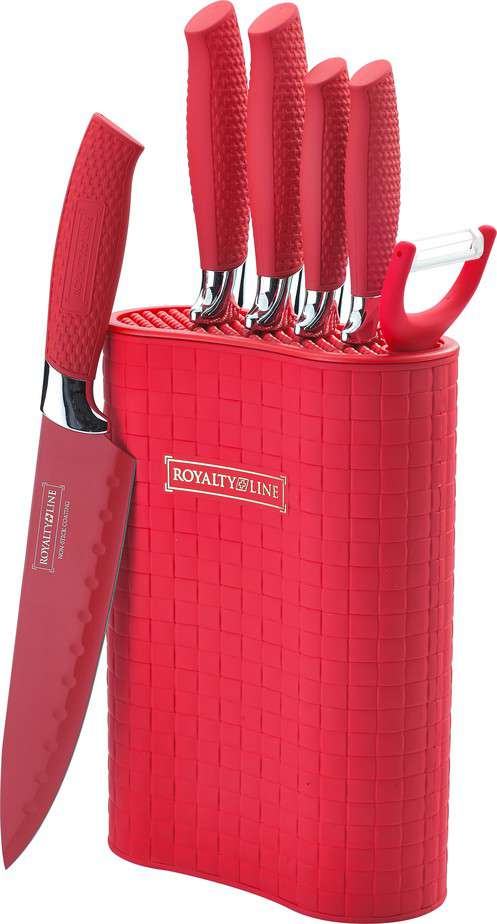
Kitchen knife sets are a practical category for retailers because they solve a clear customer need: a ready-to-use set of cutting tools for daily food preparation. They also sit naturally beside cookware, cutting boards, storage products, kitchen utensils and giftable home ranges.
For B2B buyers, however, knife sets should not be selected only because they look attractive in a product photo. The category is competitive, price-sensitive and strongly influenced by perceived quality. A retailer needs to understand blade material, handle construction, packaging, storage format, safety expectations and the difference between a low-cost promotional set and a repeatable kitchenware SKU.
This guide explains how to evaluate wholesale kitchen knife sets before adding them to a retail assortment, marketplace listing or seasonal kitchenware campaign.
Why Knife Sets Work Well in Retail Assortments
A single chef knife can be a specialist purchase, but a knife set is easier for many customers to understand. It offers several tools in one box, usually at a more accessible perceived value than buying each knife separately.
For retailers, that creates several advantages:
- Knife sets are easy to merchandise as complete kitchen solutions.
- They can be paired with cookware, bakeware, cutting boards and storage accessories.
- They work for home cooks, first-apartment buyers, gift shoppers and promotional campaigns.
- Packaging can communicate value quickly on a shelf or product page.
- Multiple price levels can serve entry, mid-range and premium customers.
The category also supports repeat seasonal buying. Kitchenware often performs well around home refresh periods, end-of-year gifting, moving season, cooking promotions and discount events. A well-selected knife set can therefore be more than a one-off product: it can become part of a broader kitchenware range.
Retailers building that range can browse MSY's current kitchen knife category and wider cookware assortment to compare available formats.
What Retail Buyers Should Compare First
When comparing suppliers, the best starting point is not only the unit price. Price matters, but a low price can become expensive if the product creates returns, poor shelf presentation, unclear specifications or inconsistent reorder availability.
Retail buyers should compare each option across four basic areas:
| Buying factor | Why it matters |
|---|---|
| Product composition | Defines the type of customer the set can serve. |
| Material and finish | Influences perceived quality, durability and care instructions. |
| Packaging | Affects shelf impact, shipping protection and giftability. |
| Supply reliability | Determines whether the SKU can be promoted repeatedly. |
This approach is especially important for wholesale kitchen knife sets because small differences in presentation can change how customers perceive the product. A set with a block, color-coded handles or a strong retail box may be easier to sell than a similar set with weak packaging, even when the blade count is the same.
Common Knife Set Formats
Knife sets can be grouped by how the customer is expected to use and store them. Retailers should match the format to the channel and price point.
Block Knife Sets
Block sets are familiar and easy to display. They often include several knives, scissors or sharpening accessories, with a block that keeps the items organized on a kitchen counter.
They work well for:
- Homeware stores
- Gift ranges
- Marketplace listings with lifestyle photography
- Mid-range kitchenware promotions
The main buying consideration is packaging size. A block set can have stronger shelf value, but it also takes more warehouse space and can increase shipping costs.
Compact Knife Sets
Compact sets usually include the essential knives without a large storage block. They can be easier to ship, easier to store and more suitable for promotional pricing.
They work well for:
- Discount campaigns
- Starter home ranges
- Online bundles
- Retailers with limited shelf space
Retailers should check whether compact sets still communicate quality clearly through packaging, blade finish and handle design. If the set looks too basic, it may compete only on price.
Color-Coded Knife Sets
Color-coded sets are useful when the product story is hygiene, easy identification or family-friendly kitchen organization. They can also stand out visually on product pages.
They work well for:
- Marketplace sellers
- General home stores
- Entry-level kitchen assortments
- Promotional campaigns where visual impact matters
The key is consistency. Colors should look intentional, not random, and the product photography should show the complete set clearly.
Premium-Look Sets
Some wholesale sets use darker finishes, stainless steel details, wooden blocks or sharper packaging to create a more premium look. These products can support a higher retail price, but buyers should check that the specification supports the presentation.
They work well for:
- Retailers building a higher-value kitchenware section
- Gift-focused campaigns
- Stores pairing knives with cookware and tableware
- B2B buyers looking for stronger margin per unit
The product should feel coherent: blade count, packaging, finish and suggested retail price all need to match.
Blade Material and Product Quality Signals
Most retail knife sets use stainless steel because it is affordable, familiar and easier to maintain than many specialist materials. For B2B buyers, the important question is how clearly the product specification explains the blade and care expectations.
When evaluating a wholesale listing, check:
- Blade material and finish
- Knife sizes included in the set
- Handle material and grip shape
- Whether the set includes a block, covers, scissors or sharpening accessory
- Cleaning and care guidance
- Packaging dimensions and weight
- Product images that show the full contents
Retailers should avoid vague product pages that only show a hero image without details. The more complete the information, the easier it is to write accurate product descriptions, train store staff and reduce customer uncertainty.
Handle Design and Daily Use
Customers often judge a knife set by how it feels in the hand. Even when selling online, handle shape and visible grip quality influence conversion because buyers imagine how the product will perform in daily use.
Retailers should look for:
- Handles that appear stable and comfortable
- A finish that matches the product's price level
- Clear product photography from more than one angle
- A balanced visual design across the full set
- No obvious mismatch between blade style and handle style
For mass retail, the handle does not need to be professional chef quality, but it does need to look reliable and suitable for everyday cooking.
Packaging, Shelf Impact and Online Conversion
Packaging is one of the most important commercial factors in the knife set category. A customer may compare several similar sets quickly, especially in a marketplace or retail aisle. The box, image layout and included accessories can decide whether the product feels like good value.
Good wholesale packaging should help the retailer answer three questions:
- What is included?
- Who is the set for?
- Why is this set worth the price?
For physical retail, packaging also needs to protect the knives and present the set clearly. For online retail, packaging images help communicate the final customer experience, especially for giftable products.
Retailers sourcing from a wholesale retail supply partner should request clear product information before building a campaign around a knife set. Good product data saves time when creating listings, labels and promotional material.
Assortment Strategy for Retailers
A strong kitchen knife range does not need dozens of almost identical products. In many cases, a simple three-level assortment is easier to manage.
| Assortment level | Product role | Typical buyer intent |
|---|---|---|
| Entry set | Affordable everyday option | Price-sensitive customer, starter kitchen |
| Mid-range set | Main shelf or marketplace product | Better presentation, broader use |
| Premium-look set | Higher perceived value | Gift buyer, home upgrade customer |
This structure helps retailers avoid overlapping products that compete with each other. It also makes promotional planning easier: entry sets can support volume campaigns, while mid-range and premium-look sets can protect margin.
The knife category should also connect with nearby products. A buyer interested in knife sets may also need pans, cookware sets, utensils, food storage or tableware. That makes cross-merchandising important across the wider MSY kitchenware catalogue.
Comparing Wholesale Sourcing Routes
Retailers can source knife sets through several routes. Each route has a different balance of control, speed, margin and complexity.
| Sourcing route | Advantages | Limitations |
|---|---|---|
| Direct factory sourcing | Potentially strong unit pricing and customization | Higher minimum orders, longer lead times, more quality-control work |
| Marketplace wholesale | Fast product discovery and broad choice | Less control over consistency, data quality and repeat availability |
| Local wholesale distributor | Easier communication, faster replenishment and EU-focused logistics | Catalogue depends on available stock and supplier partnerships |
| Mixed sourcing | Flexible range building across price levels | Requires careful product data and stock management |
Many retailers use a mixed model. They may test products through a local or regional wholesale partner, then expand the range when the category proves demand. This reduces risk compared with committing immediately to large factory orders.
MSY supports this kind of B2B buying process through current catalogue access, brand discovery and product sourcing support. Buyers looking beyond the visible catalogue can also review MSY's sourcing service for broader procurement needs.
Product Data Checklist Before Buying
Before adding a knife set to a catalogue, retail buyers should confirm the product data they will need for sales, logistics and customer support.
Use this checklist:
- Exact number of pieces in the set
- Knife types and sizes included
- Blade material and finish
- Handle material or visible handle construction
- Storage format: block, covers, case or boxed set
- Product dimensions and packaging dimensions
- Gross weight and shipping carton information
- Product images for all important angles
- Care instructions and cleaning limitations
- Barcode or product reference data where required
- Minimum order quantity and replenishment conditions
- Stock availability and lead time
This information helps prevent listing errors and reduces the risk of selling a set that customers understand differently from the retailer.
Buying Mistakes to Avoid
The knife set category can look simple, but several common buying mistakes reduce profitability.
Choosing Only by Piece Count
A 10-piece set is not automatically better than a 5-piece set. Customers care about useful knives, storage, presentation and price. A smaller set with better packaging can outperform a larger set that feels cheap or confusing.
Ignoring Packaging Size
Large block sets can look attractive, but they may take more storage space and cost more to ship. Retailers should compare the expected retail margin with the logistics cost.
Selling Without Clear Product Details
Knife sets need accurate descriptions. If the product page does not clearly explain what is included, customers may hesitate or return the product.
Building a Range With Too Much Overlap
Too many similar sets make the buying decision harder. A cleaner range with distinct price levels is often more effective.
Treating Knives as a Standalone Category
Knife sets perform better when connected to a broader kitchenware story. Pairing them with cookware, boards and utensils can improve basket value.
How MSY Helps Retail Buyers
MSY works with retailers and distributors that need practical product access across home, kitchen, electronics, personal care and seasonal categories. For kitchenware buyers, the value is not only finding one knife set. It is being able to compare a knife range with adjacent products and build a more complete retail offer.
Retail buyers can use MSY to:
- Review current wholesale kitchen products
- Compare available brands and categories
- Request quotes for suitable quantities
- Explore related kitchenware and cookware lines
- Build campaigns around practical household products
For buyers expanding a kitchenware range, it can also be useful to compare knife sets with cookware content such as the Eisenbach professional cookware B2B guide.
Final Recommendation
Wholesale kitchen knife sets can be a strong retail category when the product is selected with the full commercial picture in mind. The best option is not always the set with the most pieces or the lowest unit price. Retailers should compare product composition, material, packaging, logistics, margin and repeat availability before committing to a SKU.
A practical assortment usually includes an entry option, a dependable mid-range set and a stronger presentation product for gifting or home upgrades. From there, knife sets can connect naturally with cookware, tableware and broader household campaigns.
Retail buyers can start by reviewing the current MSY kitchen knife category, exploring the wider cookware and kitchenware range, or contacting MSY through the wholesale retail store supply page.

 and then Add to Home Screen.
